Ultimate guide to the North York Moors
Published 20th August 2026
From sweeping heather-covered moorland and ancient woodland to historic market towns, pretty stone villages and a spectacular stretch of Yorkshire coastline, the North York Moors National Park is one of the most varied landscapes in northern England.
There are countless things to do in the North York Moors, whether you want to tackle scenic walks, cycle through Dalby Forest, ride a heritage steam train, explore ruined abbeys or discover coastal villages like Robin Hood’s Bay and Staithes. In this guide, we’ll cover the best places to visit in the North York Moors, our favourite walks and outdoor activities, family days out, places to eat and everything you need to plan your North York Moors holiday.
Click on the links below to skip to that section of our guide
- North York Moors National Park at a glance
- Best places to visit in the North York Moors
- Best walks in the North York Moors
- Best family days out in the North York Moors
- Best pubs and places to eat in the North York Moors
- Best time to visit the North York Moors
- Choose the perfect North York Moors break
- How to get to the North York Moors
- Some of our favourite North York Moors stays
North York Moors National Park at a glance
The North York Moors National Park is in North Yorkshire in northern England, stretching from the Vale of Pickering and the Vale of Mowbray across to the Yorkshire coast. York, Scarborough and Middlesbrough are all within easy reach, making the national park relatively straightforward to access for a weekend or longer stay.
The North York Moors packs an incredible variety of landscapes into one national park. You can walk across vast expanses of purple heather, explore secluded valleys and ancient woodland, visit historic abbeys and picturesque villages, then head to the coast for clifftop walks and traditional fishing communities. It's an especially good choice for walking, cycling, wildlife watching, stargazing and slow countryside escapes.
Three or four days is ideal for a first visit to the North York Moors. A long weekend gives you enough time to explore some of the main villages, enjoy a good walk and spend a day on the coast, while a week allows you to discover quieter corners of the national park and explore at a more relaxed pace.
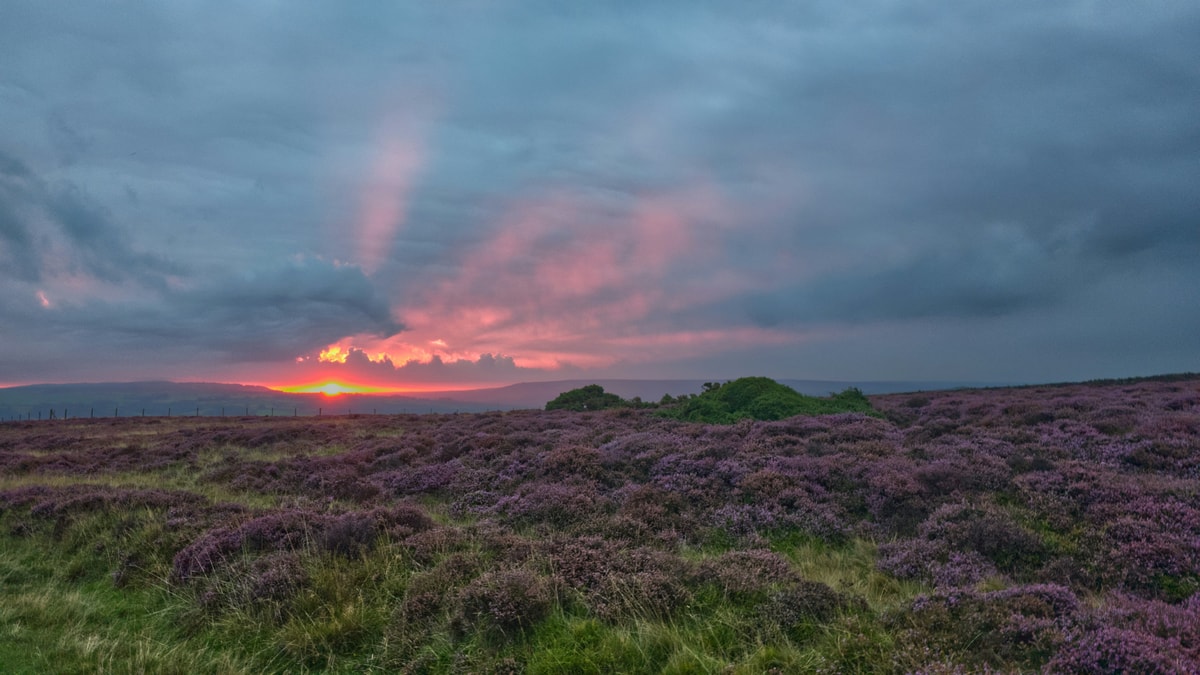
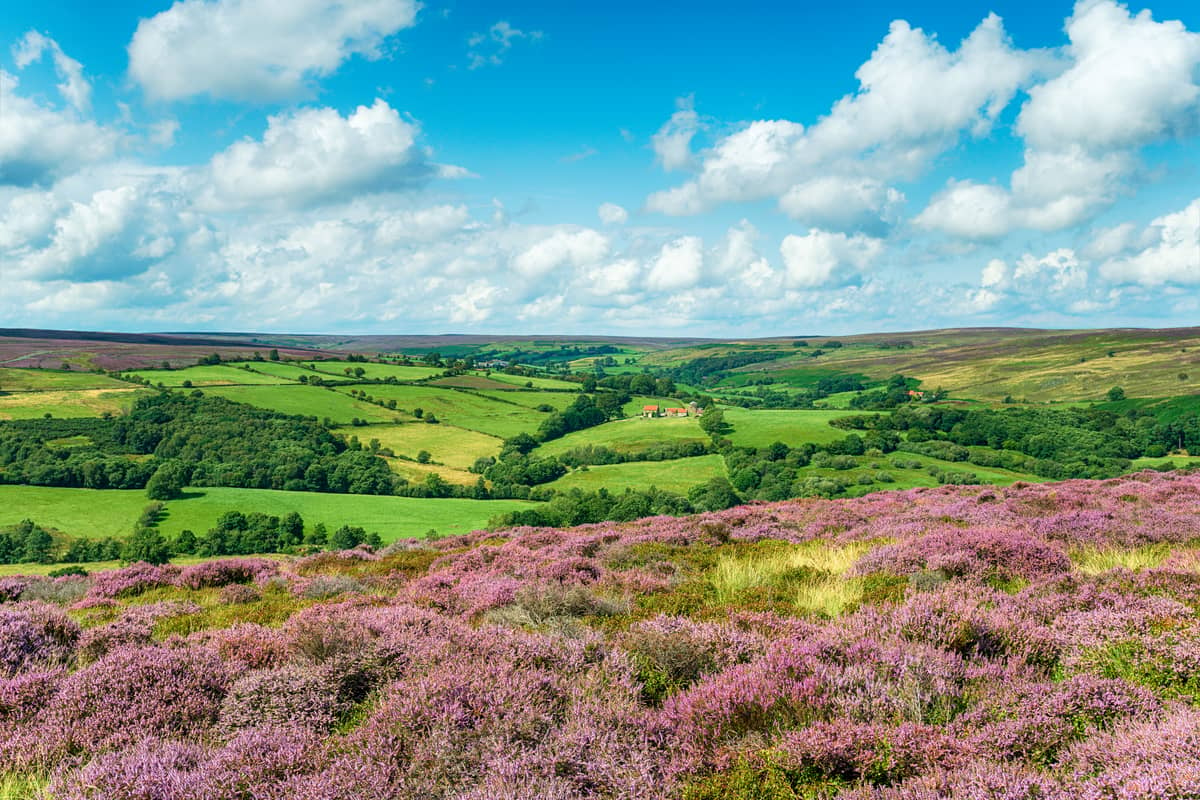
The North York Moors are famous for their vast expanses of heather moorland, particularly when the landscape turns purple in late summer. The national park is also known for the North Yorkshire Moors Railway, historic sites such as Rievaulx Abbey, dramatic coastal scenery, pretty villages and some of the darkest night skies in England.
The North York Moors are beautiful throughout the year, but late summer is particularly spectacular when the heather blooms across the moors. Spring is excellent for walking and wildlife, summer brings long days for exploring the coast, and autumn offers rich colours and quieter trails. Winter can be wonderfully atmospheric, especially if you're planning crisp walks followed by afternoons beside the fire in a country pub.
Best places to visit in the North York Moors
Helmsley
- Best for: Food, independent shopping and historic attractions.
- Vibe: Bustling, elegant and quintessentially Yorkshire.
- Don’t miss: Helmsley Castle, the Walled Garden, the market square.
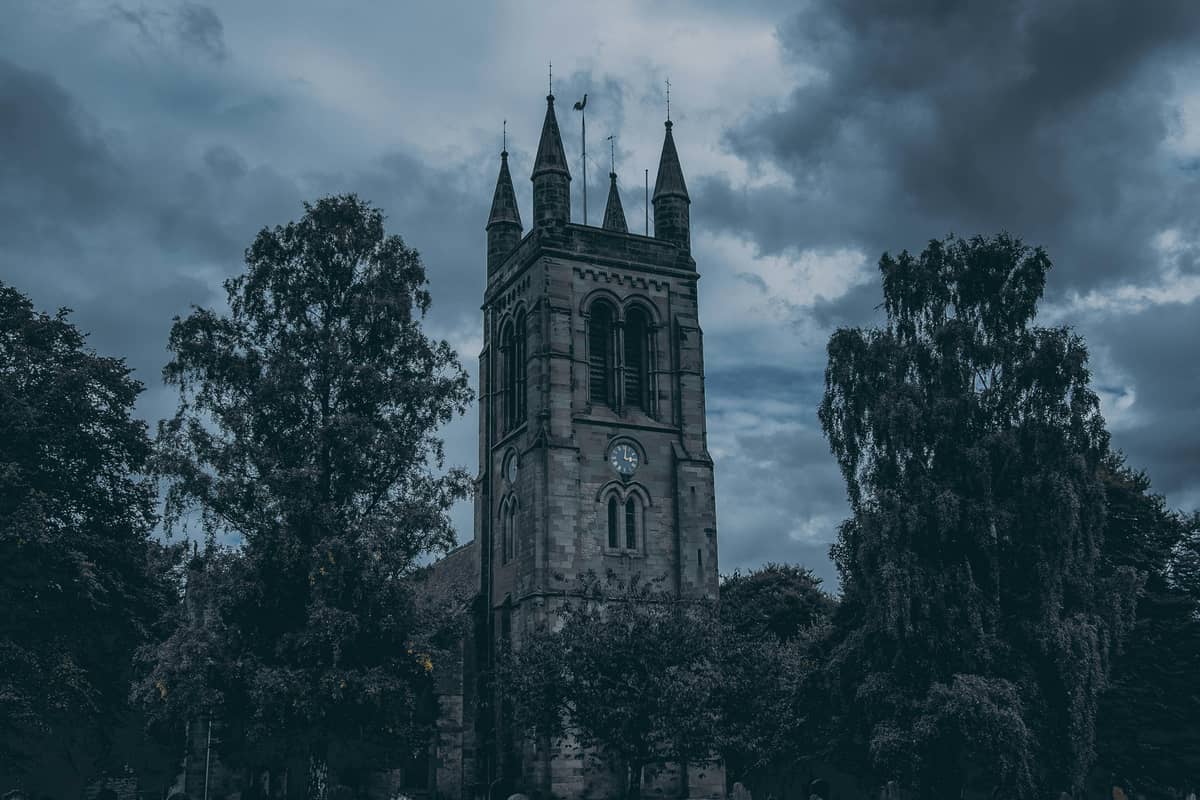
Sitting on the western edge of the national park, Helmsley is one of the best bases for exploring the North York Moors. The handsome market town combines independent shops, excellent cafés and traditional pubs with fascinating historic attractions, including the atmospheric ruins of Helmsley Castle. It’s also the starting point of the Cleveland Way National Trail, making it a great choice for walkers.
Why we love Helmsley:
- The lively market square is surrounded by independent shops, cafés, delis and traditional pubs, making Helmsley perfect for a leisurely afternoon.
- Helmsley Castle and the beautiful Walled Garden add plenty of history and interest beyond the surrounding countryside.
- Walkers can set straight off onto the Cleveland Way, with Rievaulx Abbey providing a particularly rewarding nearby destination.
- Its location on the western edge of the national park makes it an excellent base for exploring both the moors and surrounding North Yorkshire countryside.
Goathland
- Best for: Steam trains, moorland walks and TV nostalgia.
- Vibe: Atmospheric, nostalgic and wonderfully rural.
- Don’t miss: Goathland Station, Mallyan Spout, North Yorkshire Moors Railway.
Surrounded by wild moorland, Goathland is one of the most recognisable villages in the North York Moors. It became famous as Aidensfield in the television series Heartbeat, while its railway station appeared as Hogsmeade Station in the first Harry Potter film. Beyond its screen connections, Goathland is a fantastic walking destination, with trails leading through the surrounding countryside to waterfalls and neighbouring villages.
Why we love Goathland:
- Watching a steam train arrive at the beautifully preserved station feels like stepping back into another era.
- Walks from the village quickly take you into classic North York Moors scenery, including the route to Mallyan Spout waterfall.
- Its Heartbeat and Harry Potter connections add another dimension without overwhelming the village’s genuine rural character.
- Ponies, sheep, stone cottages and open moorland give Goathland exactly the atmosphere you hope to find in the North York Moors.
Pickering
- Best for: Heritage railway journeys and family breaks.
- Vibe: Traditional, friendly and full of heritage.
- Don’t miss: North Yorkshire Moors Railway, Pickering Castle, Beck Isle Museum.
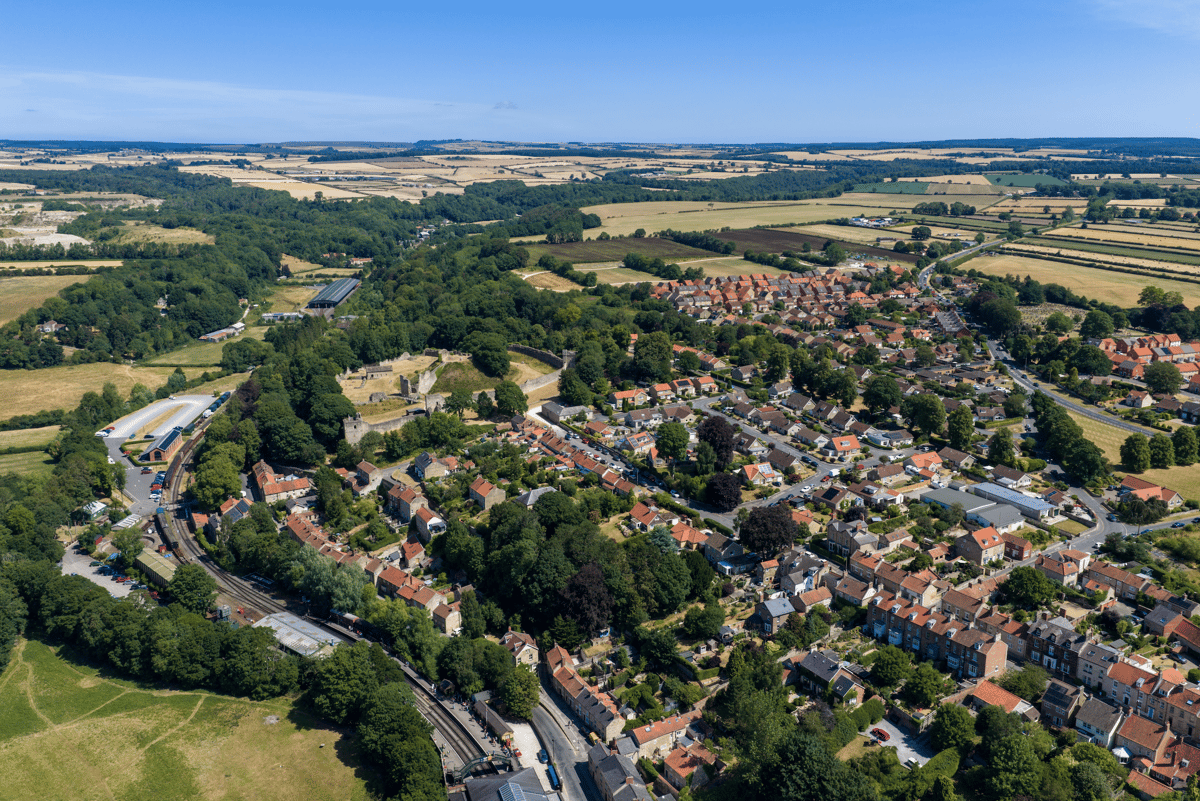
Pickering is a traditional market town on the southern edge of the North York Moors and one of the main gateways into the national park. Its biggest attraction is the North Yorkshire Moors Railway, where steam trains depart on spectacular journeys through the heart of the moors towards Whitby. There’s also a ruined castle, independent shops and plenty of cafés and pubs to discover.
Why we love Pickering:
- Riding the North Yorkshire Moors Railway from Pickering is one of the most memorable ways to experience the landscapes of the national park.
- The town offers plenty to do before or after your railway journey, from exploring Pickering Castle to browsing its independent shops.
- Its range of attractions and easy access to the surrounding countryside make it particularly good for families.
- Pickering works brilliantly as a base if you want to combine days on the moors with trips towards the Yorkshire coast.
Hutton-le-Hole
- Best for: Picture-perfect village scenery and relaxed family days out.
- Vibe: Peaceful, pretty and timeless.
- Don’t miss: Ryedale Folk Museum, village green, Hutton Beck.
Hutton-le-Hole is regularly described as one of Yorkshire’s prettiest villages, and it’s easy to see why. Traditional stone cottages gather around a broad village green crossed by Hutton Beck, with sheep often wandering freely through the centre. The village is also home to the fascinating Ryedale Folk Museum and makes a lovely starting point for exploring the quieter southern reaches of the national park.
Why we love Hutton-le-Hole:
- The combination of stone cottages, grassy banks and a gently flowing beck makes this one of the most photogenic villages in the North York Moors.
- Sheep wandering freely across the village green add to its wonderfully rural and unhurried atmosphere.
- Ryedale Folk Museum brings the history of the area to life and makes the village particularly worthwhile for families.
- It’s an easy place to slow down for a few hours, with beautiful countryside waiting just beyond the village.
Rievaulx Abbey
- Best for: History, photography and atmospheric ruins.
- Vibe: Peaceful, dramatic and steeped in history.
- Don’t miss: The abbey ruins, museum, views across Rievaulx Valley
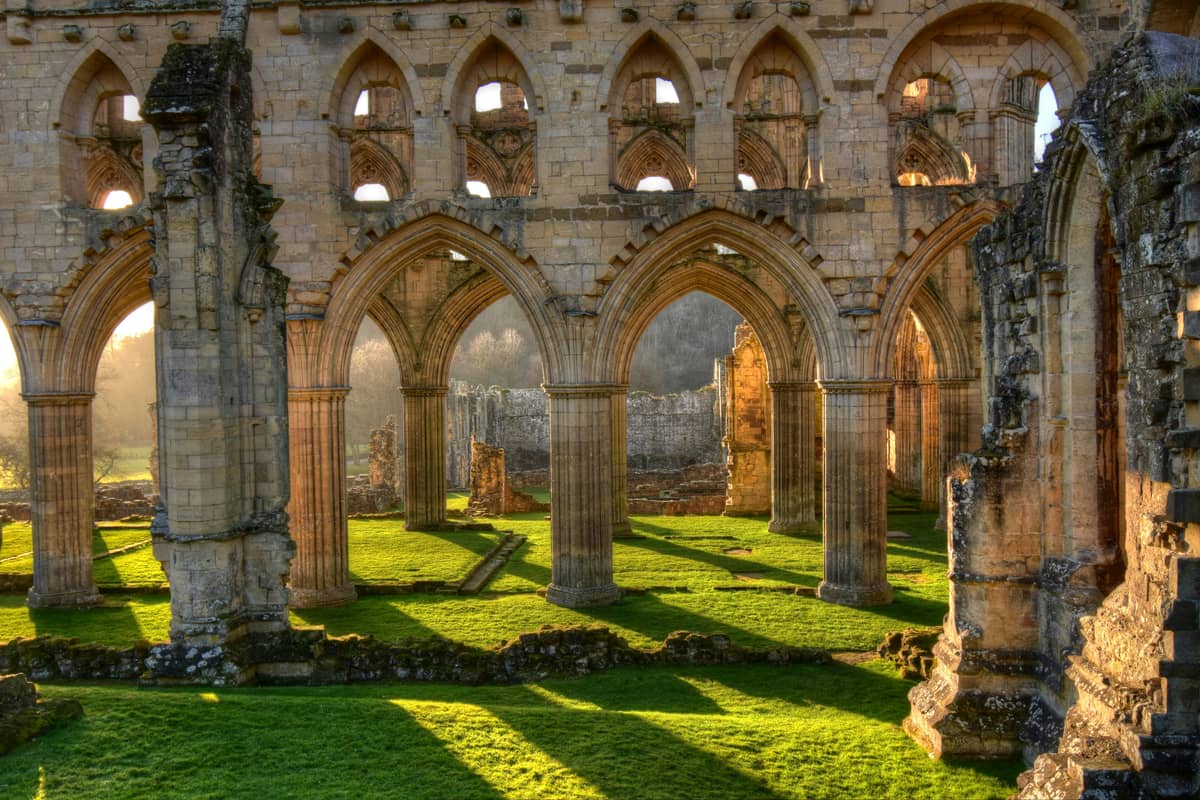
Hidden in a peaceful valley near Helmsley, Rievaulx Abbey is one of the most impressive monastic ruins in England. Founded in the 12th century, the former Cistercian abbey is surrounded by wooded hills and tranquil countryside, creating a spectacular setting for its soaring stone remains. You can explore the ruins and museum or incorporate the abbey into a longer walk from Helmsley.
Why we love Rievaulx Abbey:
- The scale of the surviving ruins makes Rievaulx one of the most impressive historic sites anywhere in North Yorkshire.
- Its secluded valley setting gives the abbey a wonderfully peaceful atmosphere, particularly outside the busiest times.
- Changing light, ancient stonework and wooded hills make it an exceptional location for photography.
- Walking here from Helmsley combines one of the area’s best historic attractions with a beautiful stretch of countryside.
Staithes
- Best for: Coastal scenery, photography and traditional fishing-village charm.
- Vibe: Creative, secluded and full of character.
- Don’t miss: Staithes harbour, Cowbar Nab, winding old village streets.
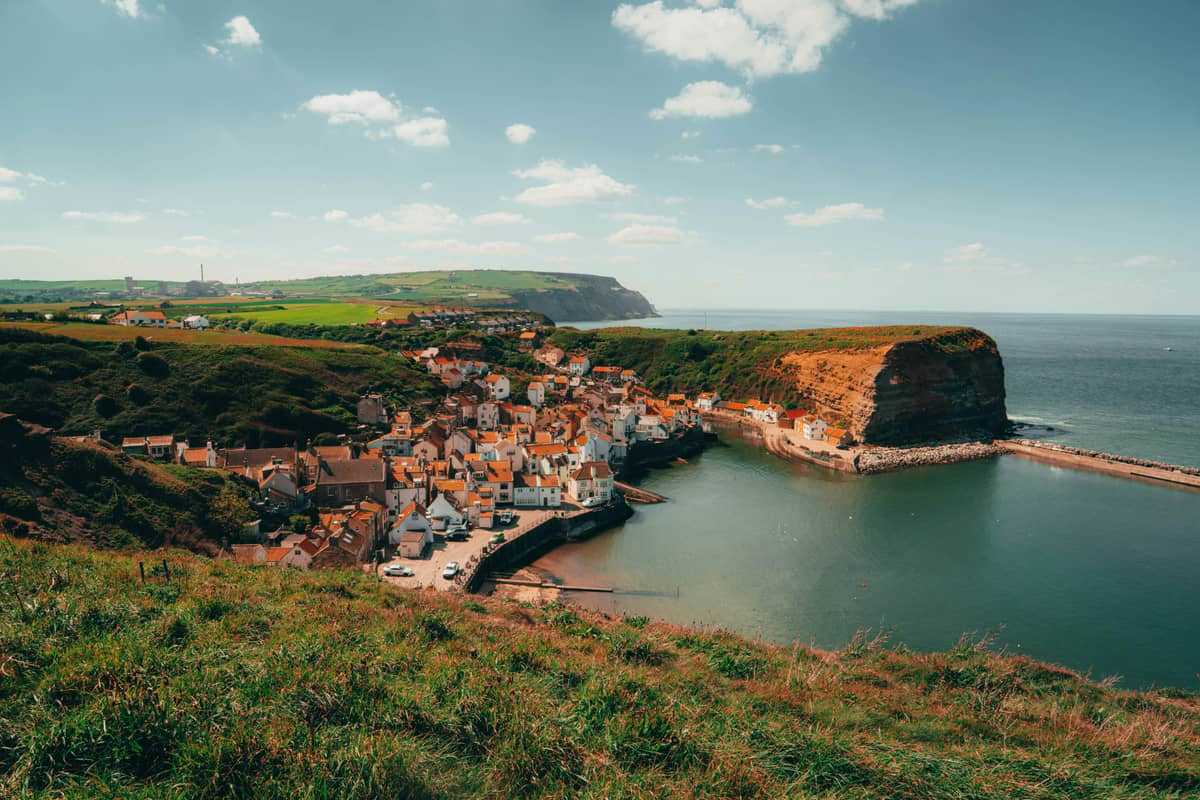
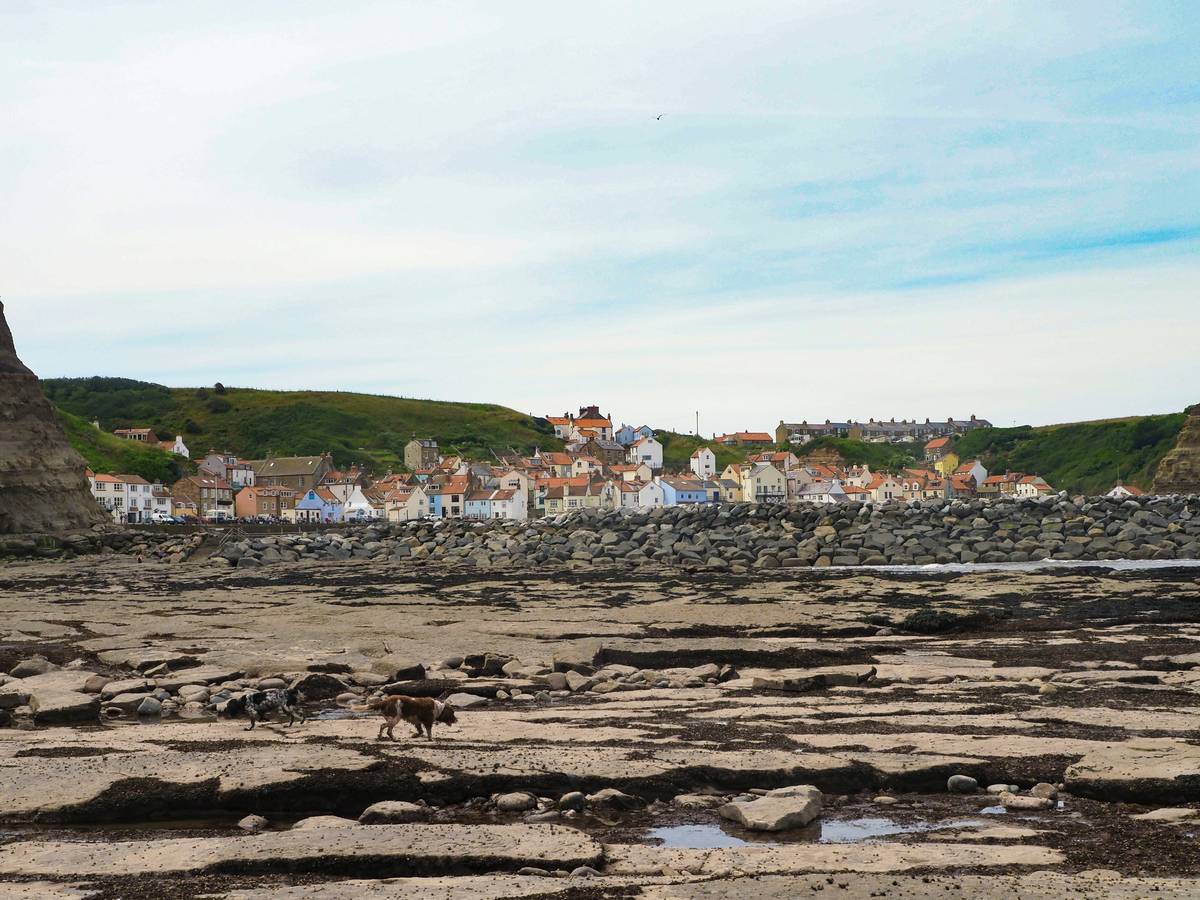
Wedged between towering cliffs on the northern edge of the national park, Staithes is a former fishing village of tightly packed cottages, narrow lanes and sweeping sea views. Once home to a young Captain James Cook, the village later became associated with a community of artists inspired by its dramatic coastal setting. Leave the car at the top of the hill and wander down through the old village to its small harbour and beach.
Why we love Staithes:
- The jumble of red-roofed cottages squeezed between steep cliffs creates one of the most memorable views on the Yorkshire coast.
- Narrow lanes and tiny passageways give the old village an intimate atmosphere that rewards exploring slowly on foot.
- Its artistic heritage continues today, with galleries and creative spaces tucked among the historic cottages.
- Walk up towards the surrounding cliffs for spectacular views back over the harbour and out across the North Sea.
Robin Hood’s Bay
- Best for: Coastal walks, history and exploring winding village streets.
- Vibe: Dramatic, characterful and wonderfully atmospheric.
- Don’t miss: The old village, beach, Cleveland Way coastal path.
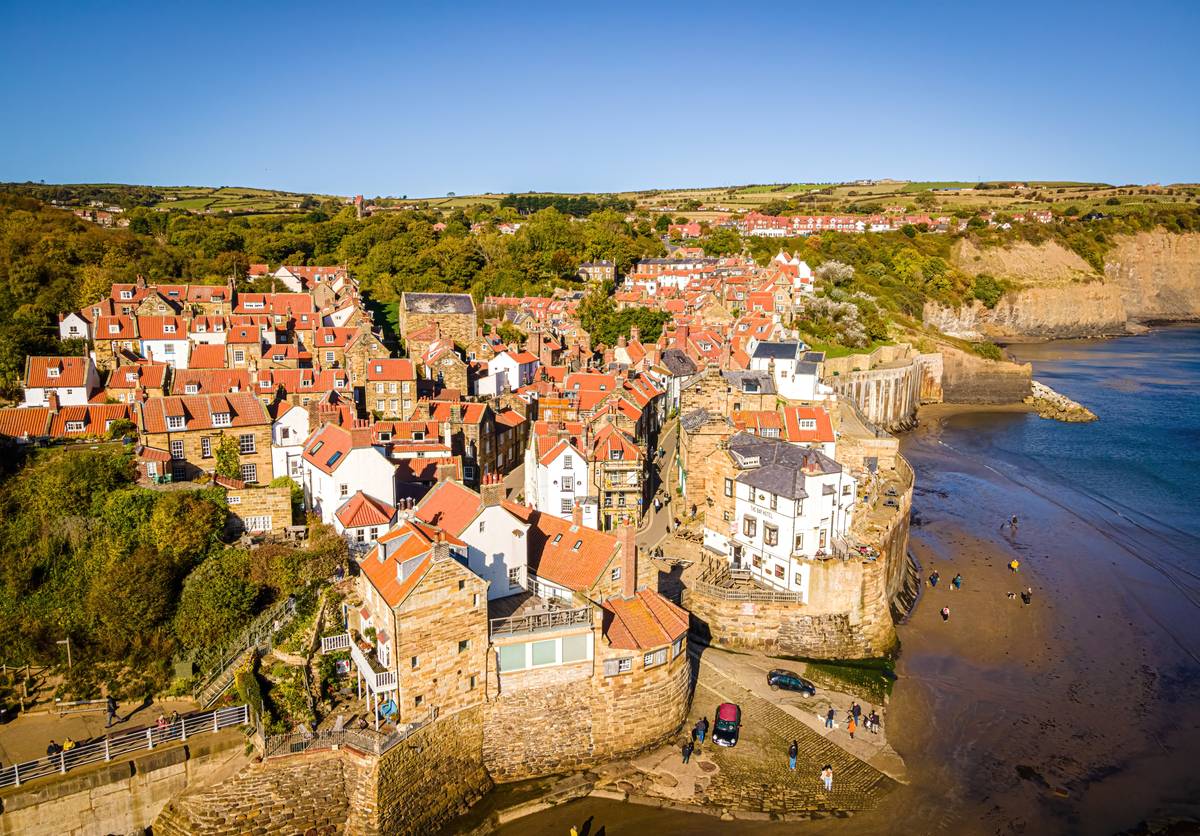
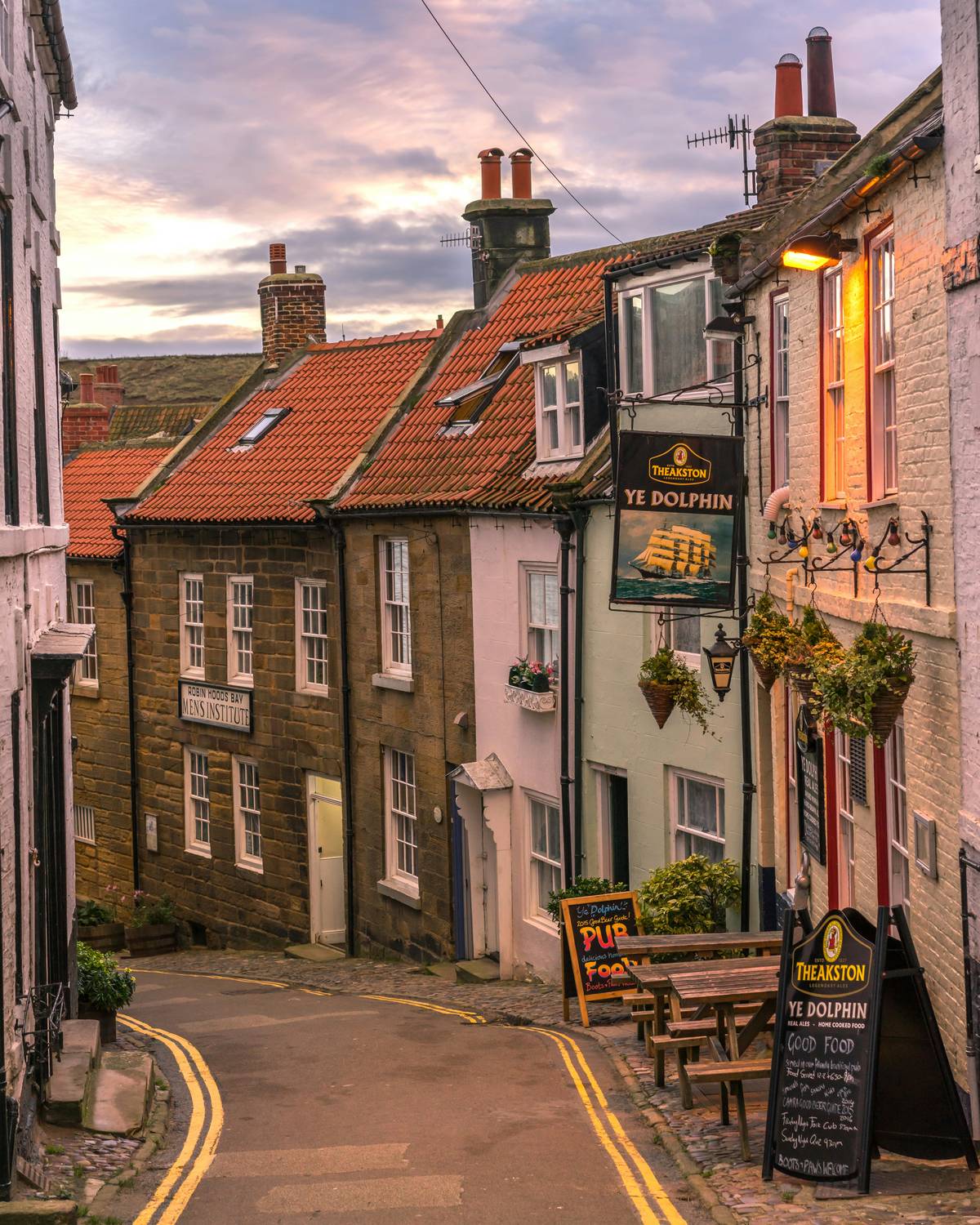
Tumbling down a steep hillside towards the North Sea, Robin Hood’s Bay is one of the most distinctive villages on the Yorkshire coast. Its maze of narrow lanes, stone cottages and hidden passageways hints at its long fishing and smuggling history, while the beach below is popular for rock pooling and fossil hunting. The Cleveland Way passes straight through the village, opening up spectacular clifftop walks in either direction.
Why we love Robin's Hood Bay:
- Getting lost among the narrow lanes and centuries-old cottages of the lower village is all part of the experience.
- The dramatic clifftop setting delivers spectacular views along one of the most beautiful stretches of the Yorkshire coast.
- At low tide, the beach is brilliant for rock pooling, fossil hunting and simply exploring the shoreline.
- Excellent coastal walks make it easy to combine time in the village with a proper North York Moors outdoor adventure.
Best walks in the North York Moors
Roseberry Topping
- Best for: Panoramic views and a short but rewarding climb.
- Vibe: Exhilarating, scenic and iconic.
- Don’t miss: The summit views, distinctive hilltop, surrounding Cleveland landscape.
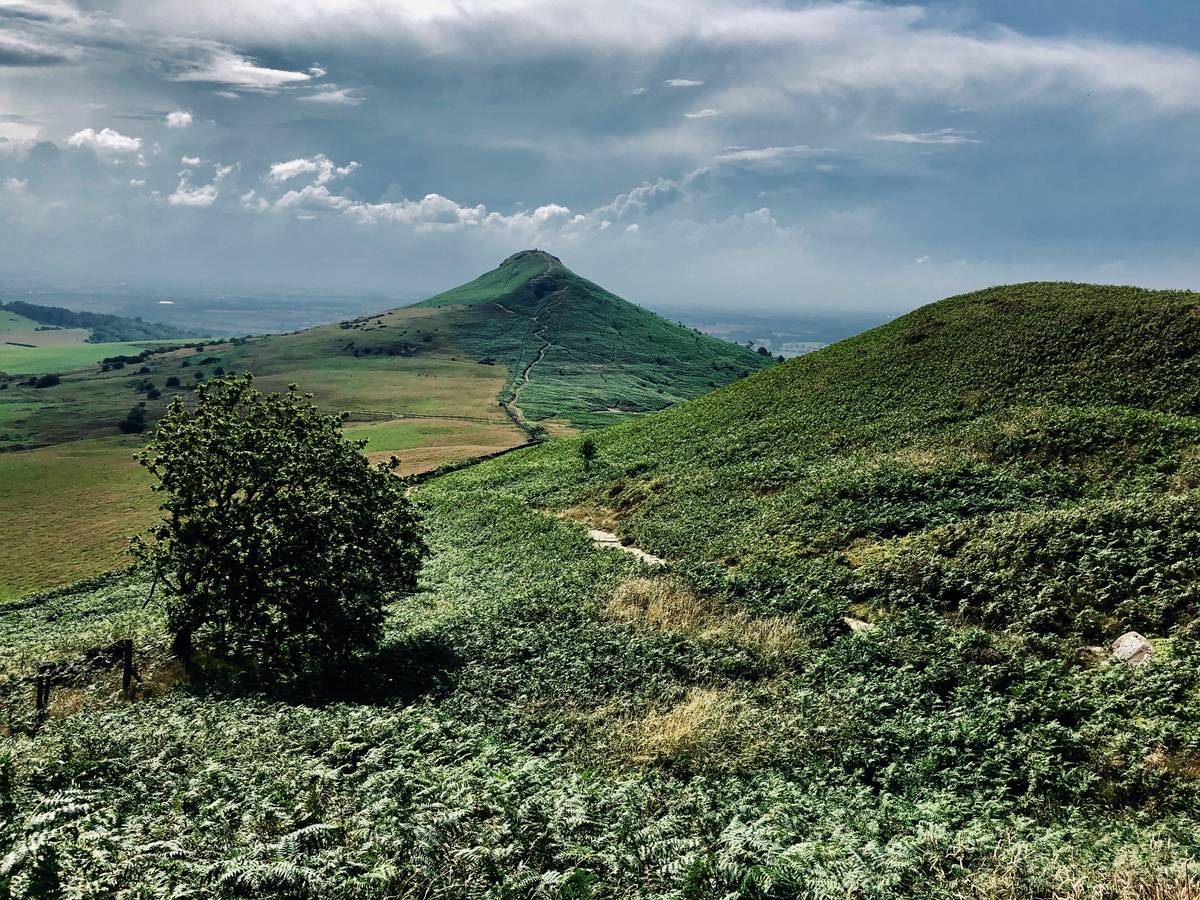
With its distinctive shape rising above the surrounding countryside, Roseberry Topping is one of the most recognisable landmarks in the North York Moors. The climb to its 320-metre summit is relatively short but steep in places, rewarding walkers with sweeping views across the Cleveland countryside and towards the moors.
Why we love Roseberry Topping:
- The relatively short climb delivers huge rewards, with panoramic views stretching across the surrounding countryside from the summit.
- Its distinctive profile makes Roseberry Topping one of the most iconic and instantly recognisable landmarks in the North York Moors.
- You can extend the walk into the surrounding countryside if you want to turn the summit climb into a longer day out.
- It’s a brilliant choice when you want a proper sense of achievement without committing to an all-day hike.
Goathland and Mallyan Spout
- Best for: Waterfalls, woodland and combining walking with a village visit.
- Vibe: Atmospheric, varied and adventurous.
- Don’t miss: Mallyan Spout waterfall, Goathland village, woodland paths.
Starting from the famous village of Goathland, this rewarding walk leads through woodland and along the valley to Mallyan Spout, one of the best-known waterfalls in the North York Moors. Water plunges around 70 feet down a rocky ravine, creating a particularly impressive sight after heavy rain. The surrounding paths can be rocky and slippery, but the varied scenery makes this one of the area's most enjoyable shorter adventures.
Why we love Goathland and Mallyan Spout:
- Mallyan Spout provides a dramatic destination, particularly after rainfall when the waterfall is at its most powerful.
- The route packs woodland, streams, rocky paths and open countryside into a relatively compact walk.
- Starting and finishing in Goathland means you can combine your walk with the village, its cafés and famous heritage railway station.
- It feels noticeably different from the wide-open moorland walks elsewhere in the national park, adding some welcome variety.
The Hole of Horcum
- Best for: Dramatic moorland scenery and longer circular walks.
- Vibe: Wild, expansive and wonderfully remote.
- Don’t miss: The Hole of Horcum viewpoint, Levisham Moor, sweeping moorland views.
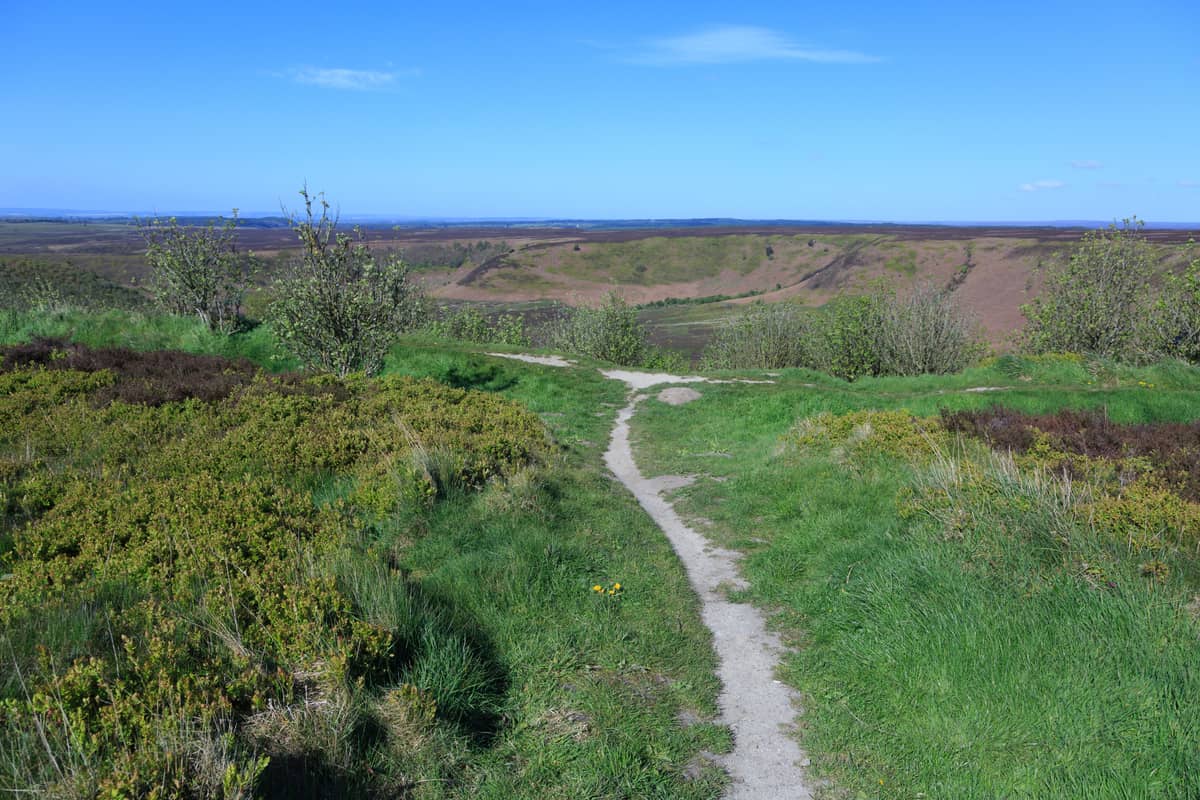
The Hole of Horcum is one of the North York Moors’ most spectacular natural landmarks, a vast hollow measuring around three-quarters of a mile across and 400 feet deep. Several walking routes explore the surrounding moorland, with the classic circular taking you down into the hollow and across beautiful open countryside around Levisham Moor.
Why we love The Hole of Horcum:
- The first view into the enormous natural amphitheatre is one of the most dramatic sights anywhere in the national park.
- Walking down into the Hole of Horcum allows you to experience the scale of the landscape rather than simply admiring it from above.
- Open moorland and huge skies give the route a wonderfully wild feeling, particularly away from the main viewpoint.
- Visit when the heather is flowering in late summer and the surrounding moors are transformed into a spectacular sea of purple.
Rosedale Railway Walk
- Best for: Industrial heritage, moorland scenery and longer hikes.
- Vibe: Remote, historic and peaceful.
- Don’t miss: Old railway remains, Rosedale Valley views, historic ironstone kilns.
The Rosedale Railway Walk follows sections of the former railway that once carried ironstone across the North York Moors during the 19th century. Today, the old trackbed provides a fascinating walking route high above Rosedale, combining remnants of the area’s industrial past with expansive views across one of the national park’s most beautiful valleys.
Why we love Rosedale Railway Walk:
- Following the old railway gives the walk a fascinating historical thread and reveals a very different side of the North York Moors.
- Remains of kilns, railway infrastructure and former workings show how dramatically this peaceful landscape has changed.
- The elevated trackbed provides superb views across Rosedale without the constant steep climbs found on some moorland routes.
- Its more remote location means you can enjoy long stretches of wonderfully peaceful countryside away from the busiest trails.
Robin Hood’s Bay to Ravenscar
- Best for: Coastal scenery and dramatic clifftop walking.
- Vibe: Wild, windswept and invigorating.
- Don’t miss: Cleveland Way views, Robin Hood’s Bay, Ravenscar cliffs.
Following the Cleveland Way north from Robin Hood’s Bay towards Ravenscar, this spectacular coastal walk showcases the wilder side of the North York Moors. The route climbs onto towering cliffs above the North Sea, with sweeping views along the Yorkshire coastline before reaching Ravenscar, dramatically positioned high above the bay.
Why we love Robin Hood’s Bay to Ravenscar:
- The clifftop sections deliver some of the finest coastal views in the North York Moors National Park.
- Starting in Robin Hood’s Bay means you can explore one of Yorkshire’s most atmospheric fishing villages before or after your walk.
- Constantly changing views of cliffs, sea and countryside make this a particularly rewarding route for photographers.
- The combination of fresh sea air, steep coastal scenery and open horizons gives the walk a completely different character from routes across the inland moors.
Best family days out in the North York Moors
The North York Moors is a fantastic destination for family holidays, with plenty to do beyond walking and exploring the countryside. From steam train journeys through the moors and action-packed forest adventures to interactive museums that bring Yorkshire’s past to life, these are some of the best family days out in the North York Moors.
A journey on the North Yorkshire Moors Railway is one of the most memorable family experiences in the national park. Heritage steam and diesel trains travel between Pickering and Whitby, passing through beautiful moorland and stopping at characterful stations including Goathland. Children will love the excitement of travelling by steam train, while the spectacular scenery makes the journey just as enjoyable for adults.
Covering thousands of acres on the southern edge of the North York Moors National Park, Dalby Forest is an outdoor playground for families. There are walking and cycling trails for different ages and abilities, play areas, picnic spots and plenty of opportunities to explore the woodland. It’s particularly good for active families, with everything from gentle forest trails to more challenging mountain biking routes.
Set in the picturesque village of Hutton-le-Hole, Ryedale Folk Museum offers a fascinating introduction to the history and rural traditions of the North York Moors. Its historic buildings and collections explore everything from farming and traditional crafts to domestic life through the centuries. The open-air setting makes it easy to explore at your own pace and provides a great addition to a family day in Hutton-le-Hole.
For families looking for something more adventurous, Go Ape Dalby takes you high into the trees of Dalby Forest. Treetop courses feature a mixture of obstacles, crossings and zip wires, with experiences designed for different ages and abilities. Combine your adventure with cycling, walking or a picnic elsewhere in the forest for an action-packed family day out in the North York Moors.
Best pubs and places to eat in the North York Moors
The North York Moors has an exceptional food scene, ranging from destination restaurants and Michelin-starred dining to remote moorland inns and welcoming village pubs. Local produce, game, seafood and ingredients from the surrounding countryside feature heavily on menus, making good food an important part of a North York Moors break.
Set in the pretty village of Harome near Helmsley, The Star Inn is one of North Yorkshire’s best-known dining destinations. The historic thatched inn combines the atmosphere of a traditional country pub with ambitious cooking inspired by Yorkshire’s landscape and produce. It’s an excellent choice for a special meal during a stay around Helmsley and the western North York Moors.
Tucked away in the tiny village of Oldstead on the edge of the North York Moors, The Black Swan is a Michelin-starred restaurant closely connected to the surrounding landscape. Chef Tommy Banks and his team use produce grown and foraged locally to create inventive tasting menus that change with the seasons. For serious food lovers, it’s one of the standout dining experiences in Yorkshire.
The Fox & Hounds sits in the attractive village of Sinnington between Pickering and Kirkbymoorside and offers the sort of warm, traditional atmosphere you want from a North Yorkshire country inn. Expect carefully prepared seasonal food alongside local ales and a cosy interior, making it a lovely place for lunch or dinner after a day exploring the southern North York Moors.
Standing high on Blakey Ridge in the heart of the moors, The Lion Inn has one of the most spectacular settings of any pub in North Yorkshire. This historic inn feels wonderfully remote, surrounded by miles of open moorland, and is a favourite stopping point for walkers tackling the surrounding trails. Hearty pub food, local ales and roaring fires make it particularly appealing after a long, windswept walk.
Overlooking the River Esk in the picturesque village of Lealholm, The Board Inn is a traditional country pub in a beautiful North York Moors setting. It makes a relaxed stop for food and drinks while exploring the Esk Valley, with the village’s stepping stones, riverside scenery and surrounding walking routes all close by. It’s exactly the sort of cosy village pub that suits a slow day exploring the quieter northern reaches of the national park.
Best time to visit the North York Moors
There’s no single best time to visit the North York Moors, as the landscape changes dramatically with the seasons. Spring brings wildlife and wildflowers, summer is perfect for long days outdoors, late summer and early autumn see the famous heather at its best, and winter offers wonderfully atmospheric walks and exceptionally dark skies.
- Best for: Walking, wildlife and quieter countryside escapes.
- Vibe: Fresh, peaceful and full of new life.
- Don’t miss: Spring wildflowers, lambs in the fields, woodland walks.
Spring is one of the loveliest times to visit the North York Moors. The valleys and woodlands turn green, wildflowers begin to appear and lambs fill the surrounding farmland, while increasingly long days provide plenty of time for walking and cycling. Visit outside the school holidays and many of the national park’s best-known trails and villages remain pleasantly peaceful.
Why we love visiting the North York Moors in spring:
- Mild temperatures and longer days create excellent conditions for exploring the moors on foot or by bike.
- Woodlands, valleys and roadside verges burst into colour as wildflowers and fresh greenery return to the landscape.
- Lambs, nesting birds and other wildlife make spring particularly rewarding for nature lovers.
- Visitor numbers are generally lower than in summer, so popular villages and walking routes can feel much quieter.
- Best for: Walking, family holidays and exploring the Yorkshire coast.
- Vibe: Lively, colourful and outdoorsy.
- Don’t miss: Coastal walks, long evenings, the beginning of the heather season.
Summer brings long daylight hours and some of the best conditions for exploring the North York Moors. Walk across open moorland, cycle through Dalby Forest, spend a day around Robin Hood’s Bay or Staithes and make the most of warm evenings in village pub gardens. Towards the end of summer, the flowering heather begins transforming the moors into vast swathes of purple.
Why we love visiting the North York Moors in summer:
- Long days mean you can fit walks, villages and coastal adventures into the same trip without feeling rushed.
- Warmer weather makes this the best season for combining the national park with beaches and coastal walks.
- Family attractions, heritage railways and outdoor activities are all in full swing during the summer months.
- Late summer brings the spectacular heather bloom, creating one of the North York Moors’ most iconic landscapes.
- Best for: Heather, photography and quieter walking holidays.
- Vibe: Colourful, atmospheric and peaceful.
- Don’t miss: Purple moorland, autumn woodland, crisp walking days.
Early autumn can be one of the most beautiful times to explore the North York Moors, with late-flowering heather giving way to rich seasonal colours across the woods and valleys. Cooler temperatures are excellent for longer walks, while falling visitor numbers make popular routes and villages noticeably quieter than during the height of summer.
Why we love visiting the North York Moors in autumn:
- Early in the season you may still catch the famous purple heather carpeting large areas of open moorland.
- Woodland turns shades of gold, copper and red, bringing another burst of colour after the heather fades.
- Cooler conditions are ideal for tackling longer walks such as the Hole of Horcum or sections of the Cleveland Way.
- Quieter villages, cosy pubs and atmospheric landscapes make autumn particularly good for relaxed weekend breaks.
- Best for: Stargazing, cosy pub breaks and crowd-free walks.
- Vibe: Wild, dramatic and wonderfully cosy.
- Don’t miss: Dark skies, frosty moorland, fireside pub lunches.
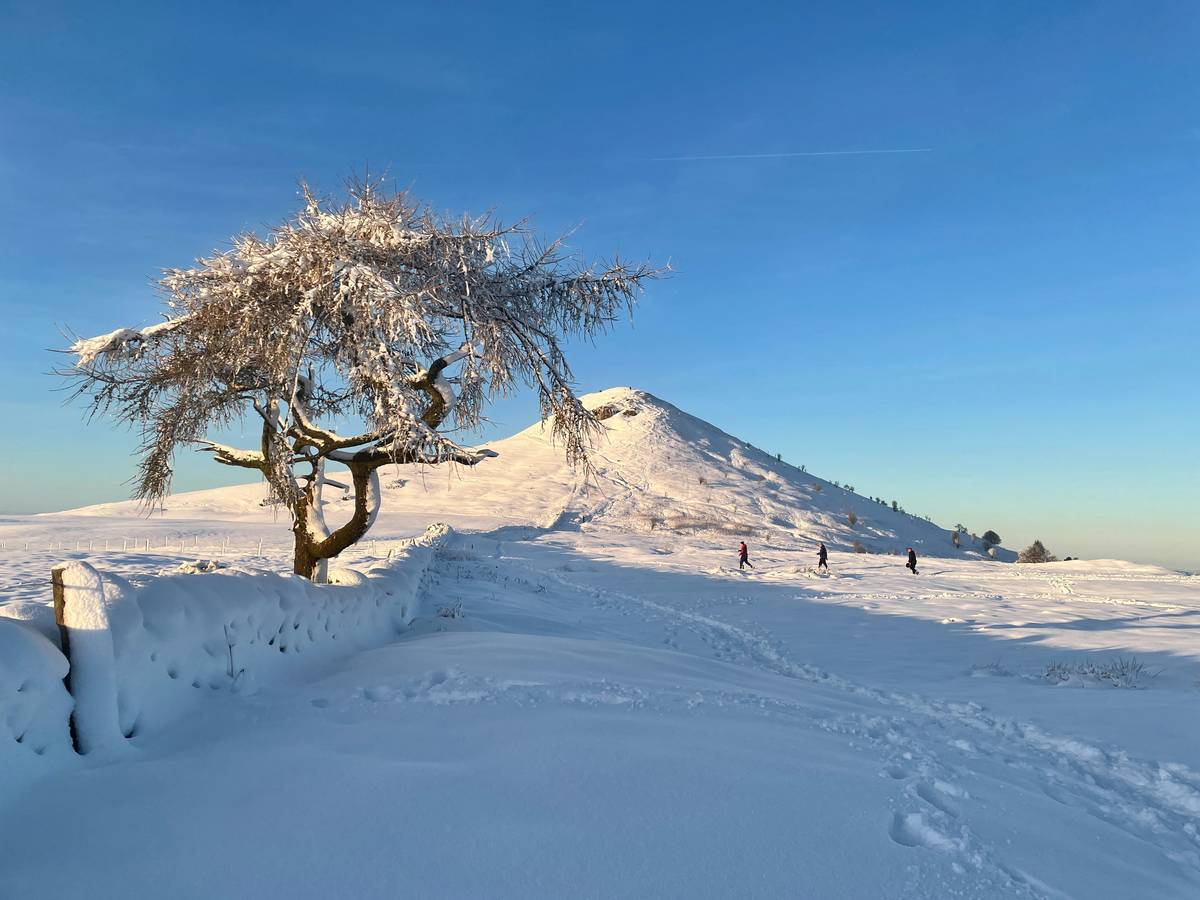
Winter reveals the North York Moors at its wildest. Crisp mornings, low sunlight and occasional frost or snow can completely transform the landscape, while quieter trails offer a real sense of solitude. The long nights also make winter one of the best seasons for stargazing, particularly on clear nights away from surrounding towns.
Why we love visiting the North York Moors in winter:
- Long, dark nights create some of the best stargazing opportunities of the year within the International Dark Sky Reserve.
- Frost, mist and occasional snow can make the moorland look especially dramatic and beautiful.
- Popular walks and villages are far quieter, allowing you to experience a more peaceful side of the national park.
- Few things beat returning from a cold moorland walk to a traditional Yorkshire pub with a roaring fire.
Choose the perfect North York Moors break
The North York Moors offers something for almost every kind of countryside escape, from serious walking weekends and romantic stays to family adventures and food-focused breaks. Its combination of wild moorland, pretty villages, forests, dark skies and dramatic coastline makes it easy to shape a trip around the things you love most.
The North York Moors is one of England’s great walking destinations, with more than 1,400 miles of paths and tracks to explore. Base yourself around Helmsley for access to the Cleveland Way, choose Goathland for waterfalls and moorland scenery or head to Robin Hood’s Bay for spectacular coastal walking. Roseberry Topping, the Hole of Horcum and Rosedale are other highlights for a walking-focused break.
Quiet villages, boutique country stays, excellent restaurants and miles of peaceful countryside make the North York Moors ideal for a romantic weekend. Spend the day walking across the moors, ride the heritage railway through the countryside or explore villages such as Hutton-le-Hole before settling into a cosy pub for the evening. Helmsley is particularly good for couples who want restaurants and shops alongside easy access to the countryside.
Families have plenty to keep them busy in the North York Moors, from steam train journeys on the North Yorkshire Moors Railway to cycling and outdoor adventures at Dalby Forest. Go Ape Dalby, Ryedale Folk Museum and the beaches around Robin Hood’s Bay add even more variety, while easy woodland and moorland walks offer plenty of opportunities for affordable days outdoors.
North Yorkshire has become one of England’s most exciting foodie destinations, and the area surrounding the North York Moors is home to everything from Michelin-starred restaurants to traditional village pubs. Plan a special meal at The Black Swan at Oldstead or The Star Inn at Harome, then balance it with hearty pub lunches, local produce and cosy evenings in country inns.
Head to the eastern edge of the North York Moors for towering cliffs, hidden coves, fishing villages and some of Yorkshire’s finest coastal walks. Robin Hood’s Bay and Staithes are essential stops, while the Cleveland Way offers miles of spectacular clifftop hiking. Fossil hunting, rock pooling and exploring old fishing villages make the coast just as rewarding for families as it is for serious walkers.
The North York Moors is an International Dark Sky Reserve and one of the best places in England to experience a truly dark night sky. Stay away from the larger towns and you can enjoy remarkable views of stars and constellations, with the Milky Way visible under the right conditions. Dalby Forest and Sutton Bank are among the best-known stargazing locations, and the annual Dark Skies Festival is a particularly good reason to plan a winter visit.
How to get to the North York Moors
The North York Moors National Park is easily accessible from York, Leeds, Middlesbrough and other parts of northern England. A car offers the greatest freedom once you arrive, particularly for reaching remote walks and villages, but rail and bus connections make a car-free North York Moors break possible too.
Driving is the easiest way to explore the North York Moors, particularly if you want to combine inland villages, remote walking routes and the coast.
- York to Helmsley takes roughly an hour.
- Leeds to the western North York Moors takes around 1.5 hours.
- The A170 provides one of the main east-west routes along the southern edge of the national park.
- Numerous car parks provide access to popular walks, viewpoints and beauty spots.
- Moorland roads can be narrow and exposed, so allow extra time for journeys between destinations.
There are no mainline railway stations in the central moorland, but several routes provide convenient access to the edges of the national park.
- York is a major rail hub with direct services from London, Edinburgh, Leeds and other UK cities.
- The Esk Valley Railway connects Middlesbrough with Whitby, stopping at villages including Castleton, Danby, Lealholm and Grosmont.
- Malton is a useful rail station for reaching Pickering and the southern North York Moors by onward bus or taxi.
- The North Yorkshire Moors Railway provides heritage services through the national park and can form part of a car-free visit.
Local bus services connect a number of the North York Moors’ towns, villages and coastal destinations, although services can be less frequent in remote areas.
- Bus connections are available from York and Malton towards Pickering and Helmsley.
- Whitby provides useful connections for exploring the eastern and coastal areas of the national park.
- The Moorsbus network operates seasonal services designed to help visitors reach countryside destinations.
- Always check current timetables before travelling, particularly on Sundays and outside the summer season.
For visitors travelling from further afield, several airports provide access to North Yorkshire, although you’ll generally need to continue your journey by road or rail.
- Teesside International Airport is convenient for the northern side of the national park.
- Leeds Bradford Airport provides access from a wider range of UK and international destinations.
- Newcastle Airport is another option for visitors approaching from the north.
- Hiring a car from the airport is usually the simplest option if you plan to explore several parts of the national park.
Some of our favourite North York Moors stays
Lark - A Place in the Pines
Northallerton
The Grange at High Oaks Grange
Pickering
Yorkshire Burrows - Hare's View
York
Yorkshire Burrows - Pheasant's Roost
York
The Nest
Northallerton
Studford Luxury Lodges
Ampleforth
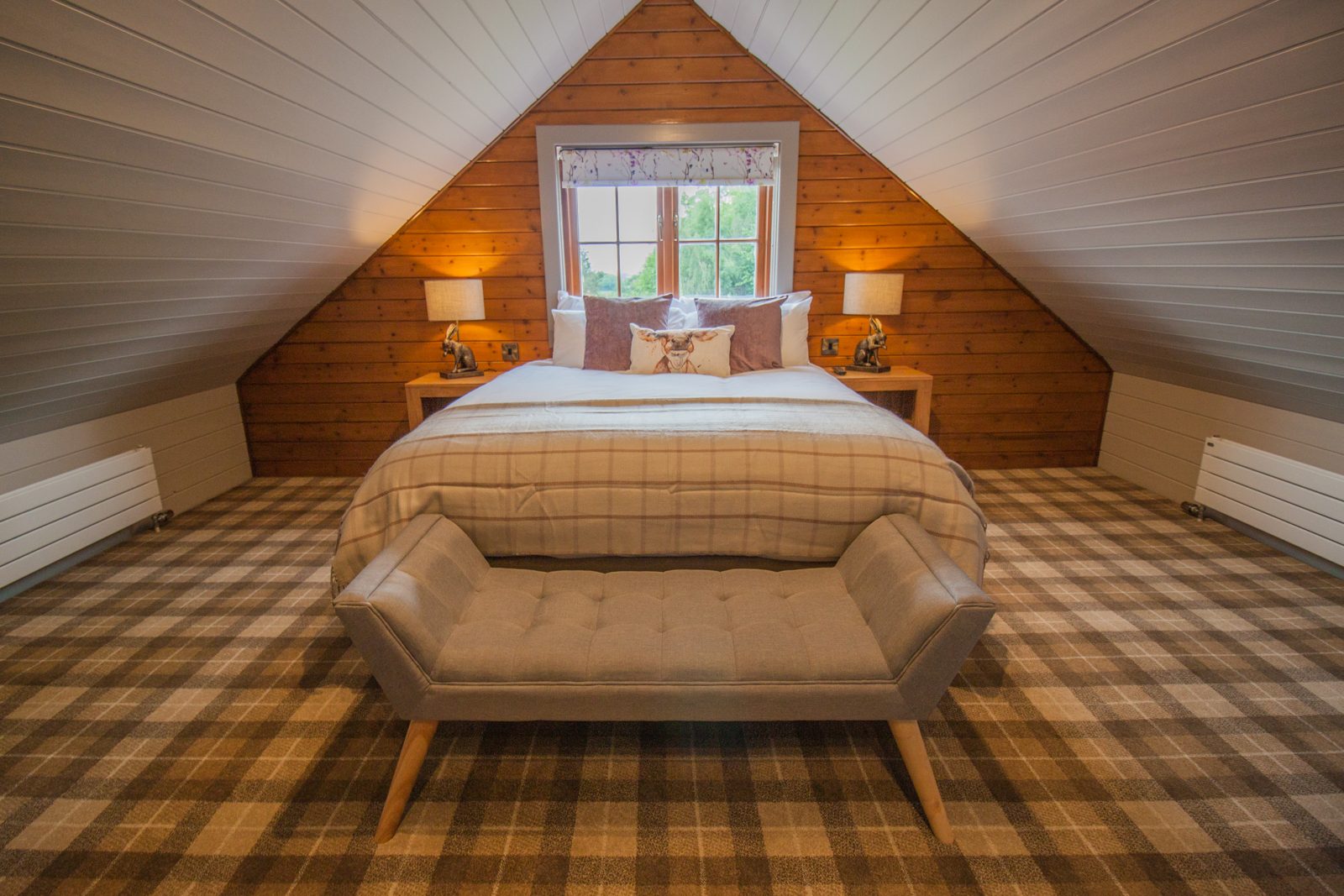
The Lodges at High Oaks Grange
Pickering
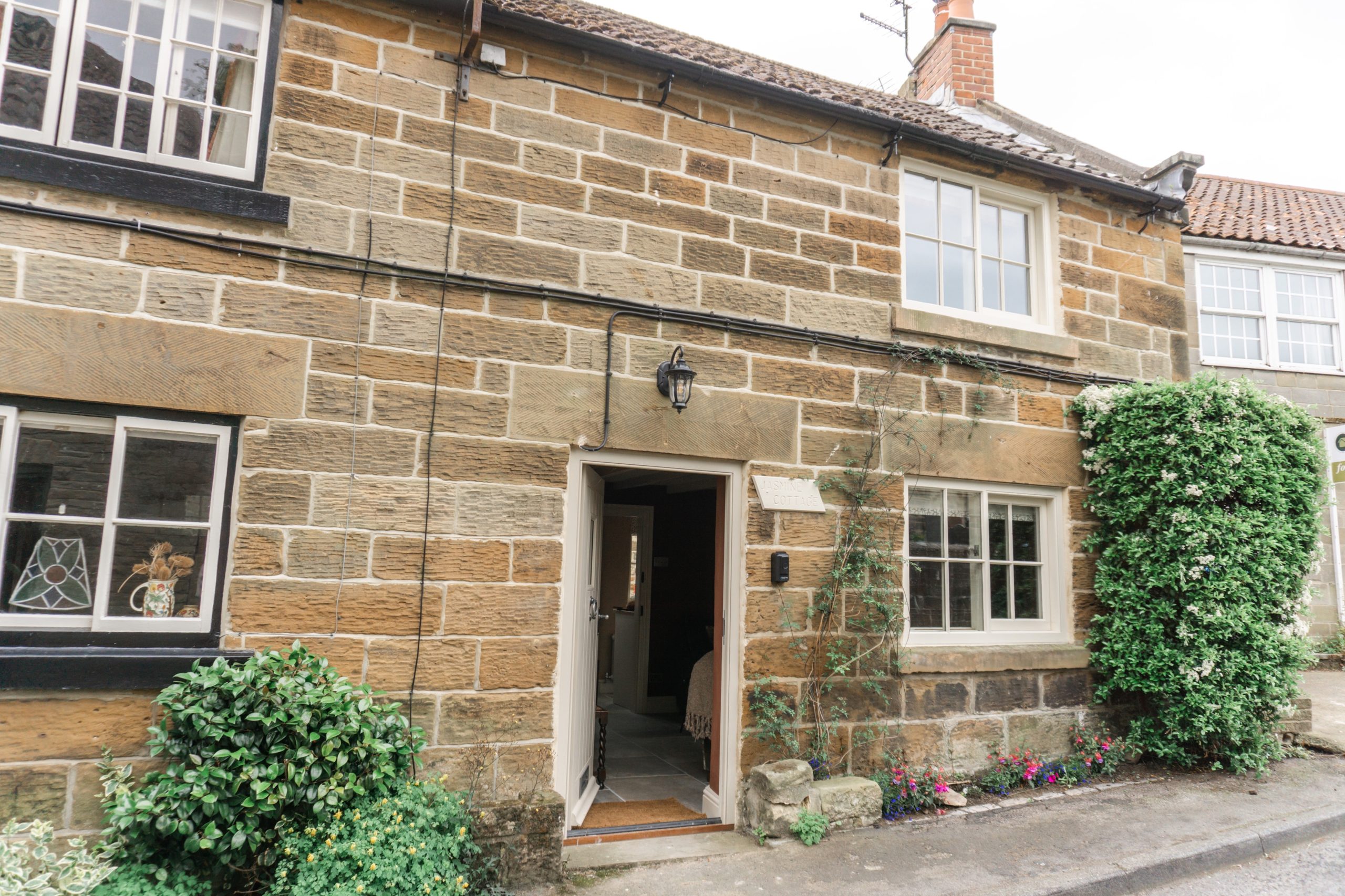
Jasmine Cottage
Osmotherley
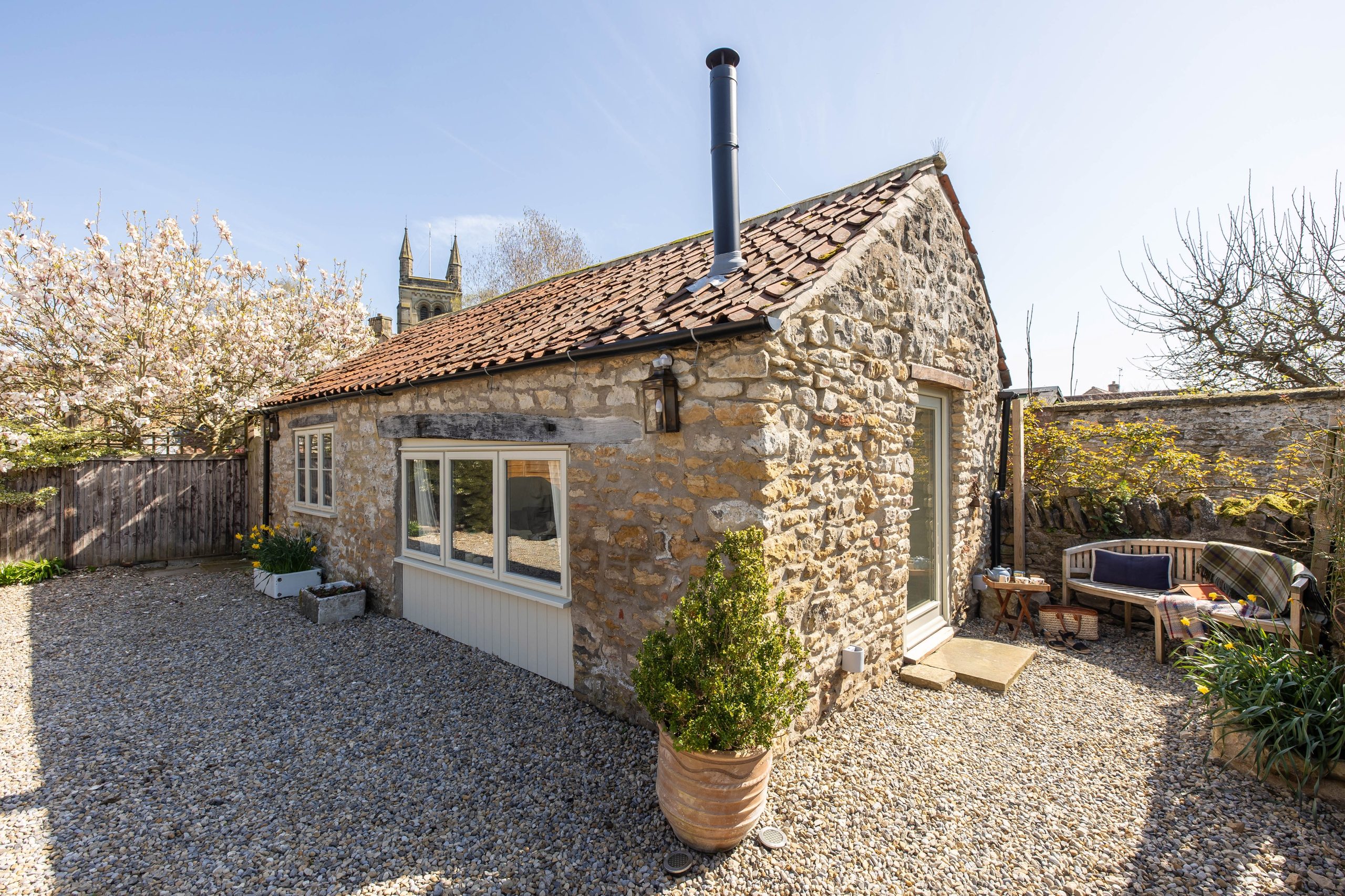
Little Barn Helmsley
Helmsley
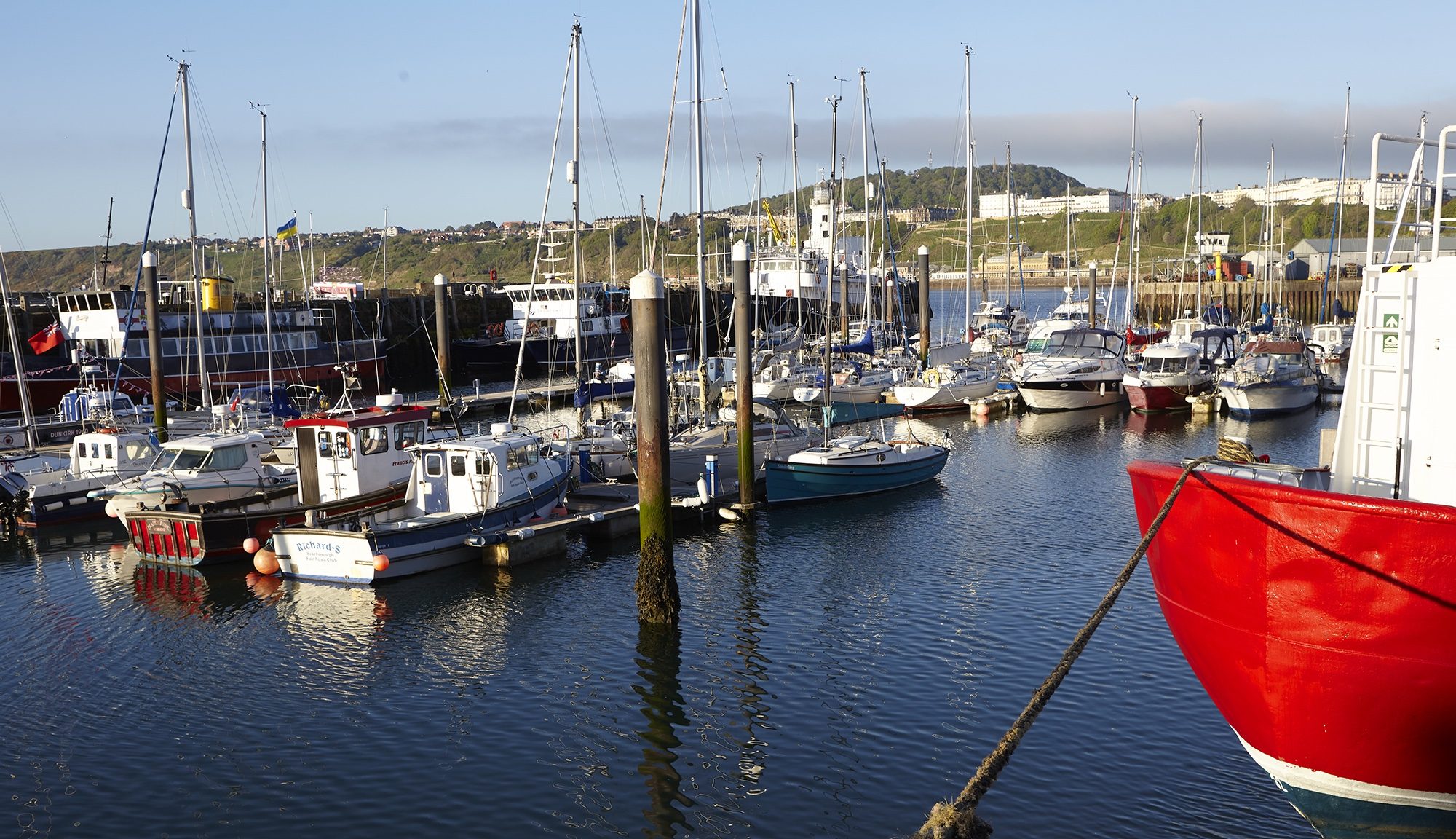
32 Sandside
Scarborough
Larpool Mill
Whitby
The North York Moors National Park is in North Yorkshire in northern England. It stretches from the Vale of Mowbray and Hambleton Hills in the west towards the Yorkshire coast in the east, encompassing moorland, forests, valleys and coastal scenery.
The North York Moors are best known for their vast expanses of heather moorland, historic villages, steam railways and dramatic Yorkshire coastline. The national park is also renowned for walking, cycling, wildlife and exceptionally dark night skies.
Three or four days is enough to experience several of the North York Moors’ highlights, including a good walk, a couple of villages and a trip to the coast. Stay for a week and you’ll have time to explore quieter valleys, longer walking routes and more of the surrounding North Yorkshire countryside.
Helmsley is one of the best all-round bases, particularly if you want restaurants, shops and easy access to walking routes. Pickering is excellent for families and the heritage railway, while Goathland suits walkers and Robin Hood’s Bay is ideal if you want to combine the moors with the Yorkshire coast.
Some of the best North York Moors walks include Roseberry Topping, the Hole of Horcum, Goathland and Mallyan Spout, the Rosedale Railway Walk and the coastal route between Robin Hood’s Bay and Ravenscar. The Cleveland Way National Trail also crosses some of the national park’s finest landscapes.
Yes, although exploring without a car requires a little more planning. The Esk Valley Railway, local buses and seasonal services connect a number of towns and villages, while the North Yorkshire Moors Railway provides another way to travel through the park. Staying somewhere with good transport connections, such as Pickering or around the Esk Valley, makes a car-free break easier.
Heather usually begins flowering during August, with the moors often at their most spectacular from mid-August into early September. Exact timings vary depending on the weather and conditions each year.
Yes. Families can ride the North Yorkshire Moors Railway, cycle through Dalby Forest, tackle the treetop courses at Go Ape Dalby and explore Ryedale Folk Museum. Easy walks, beaches, rock pooling and wildlife watching also provide plenty of inexpensive family activities.
Dalby Forest and Sutton Bank are two of the best-known places for stargazing in the North York Moors. The national park forms part of an International Dark Sky Reserve, so many remote moorland locations offer exceptional views of the night sky when conditions are clear.
Yes, the North York Moors is a fantastic destination for dog-friendly holidays. Dogs are welcome on public rights of way, but owners should keep them under close control around livestock and wildlife. Restrictions can apply on some access land during the bird-nesting season, so always follow signs and local guidance.